Reasonable Adjustments

16th Jun

Does your child or young person have a health passport? 📋

 
A health passport is a document that helps healthcare professionals understand your child better.
 
It can include information about:
πŸ’šHow they communicate
πŸ’šWhat helps them feel safe
πŸ’š Sensory needs and triggers
πŸ’š Medical conditions and medications
πŸ’š Things they may find difficult
πŸ’š How they express pain or distress
 
For many families, a health passport can also reduce the need to repeatedly explain their child's needs to different healthcare professionals. Instead of having the same conversations over and over again, important information is available in one place for staff to refer to.
 
Sharing a health passport before a hospital appointment, admission or emergency visit can help staff provide more personalised care and reduce stress for both your child and your family.
 
Many NHS trusts provide their own templates, often called a health passport, hospital passport, learning disability passport or communication passport.
 
If your child/young person doesn't already have one, try searching your local NHS trust's website or asking your GP surgery, learning disability nursing team, paediatrician or hospital for a template.
 
πŸ’‘ Keep a digital copy on your phone so it's always available if you need unexpected medical care.
 
Here's a good template from the NHS website πŸ” https://f.mtr.cool/sbjatbpesx
Reasonable Adjustments
13th Apr

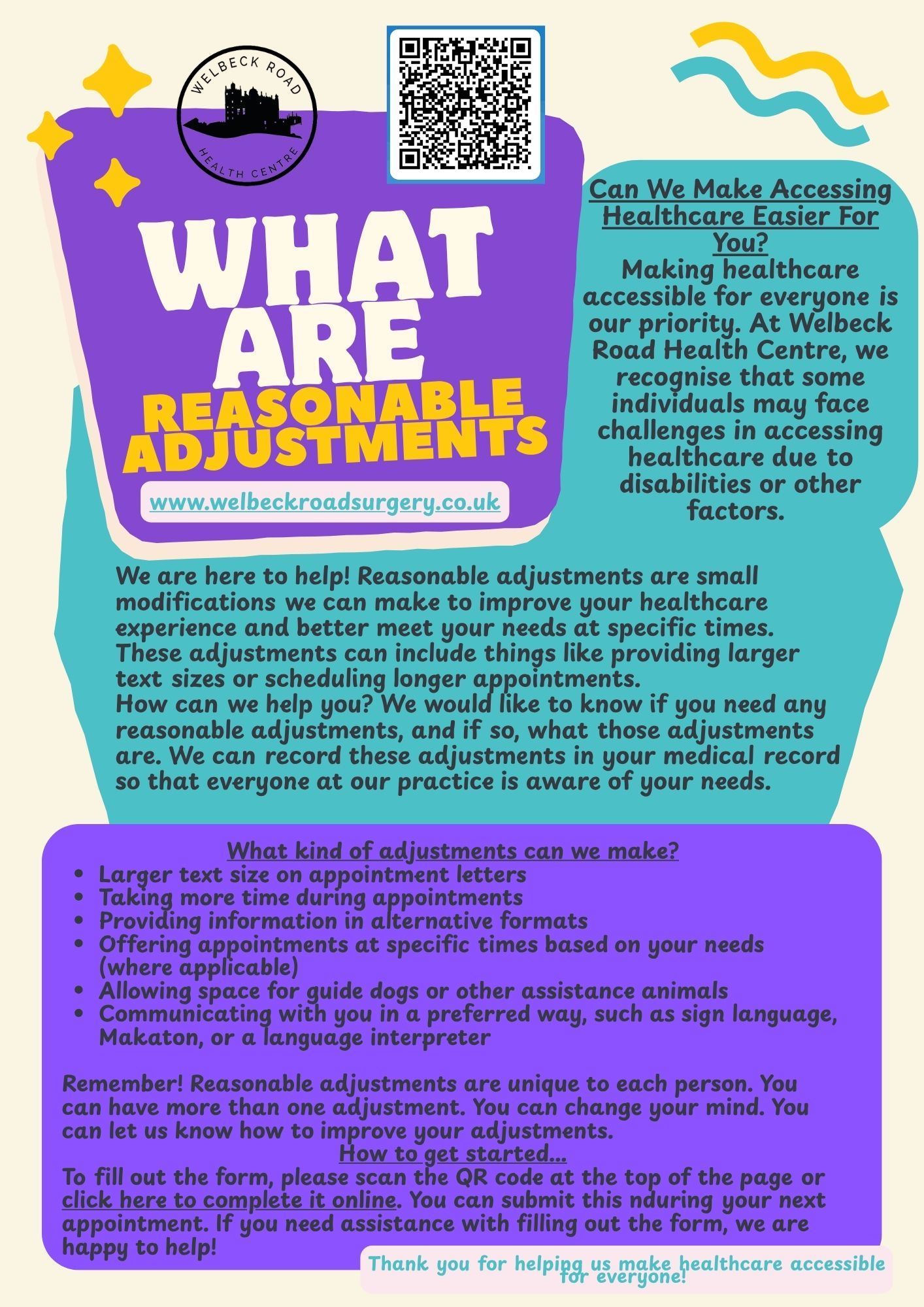
What are Reasonable Adjustments?

The Equality Act 2010 says all health and care services must be accessible for people with disabilities, and these are called "Reasonable Adjustments".
 
This includes all disabled people or those with long-term health conditions.
 
Reasonable adjustments can be small changes, such as (but not limited to):
  • Providing longer appointment times
  • A quiet room for people to wait in
  • Providing information in an easy-to-read format
  • Larger text on appointment letters or forms
  • Allowing space for guide dogs
  • Communicating in a preferred way, like using sign language or a language interpreter
How can we help you?
 
We want to know if you need any reasonable adjustments and what they are. We can record these adjustments to your medical records so everyone in our Practice is aware of your needs.
 
** Please either:
This is to let us know what we can do to help you access services at the Practice. 


"The Reasonable Adjustment Digital Flag is a national interoperability tool designed to support the safe and consistent sharing of key information across health and social care services. It's purpose is to help staff understand a person’s needs more quickly, improve communication and reduce the need for disabled people and their carers to repeat their story to successive health and care professionals and organisations.

The Information Standard Notice (ISN) sets out the technical and data requirements for implementing the flag. It does not tell clinicians how to provide care for the people who use their services nor does it prescribe what information service providers must record. Those decisions remain entirely with service providers, using their clinical or professional judgement and following relevant operational processes, and professional standards

The flag does not replace or reinterpret the Equality Act 2010. It enables organisations to record a disabled person’s reasonable adjustments and securely share them with other health and care services, reducing the risk that their needs are overlooked. It enables health and care services to anticipate and provide reasonable adjustments in line with their duty under the Equality Act 2010."

Page last reviewed: 16 June 2026
Page created: 13 April 2026